


A Review of "This May Be the Year" by Carole Giangrande
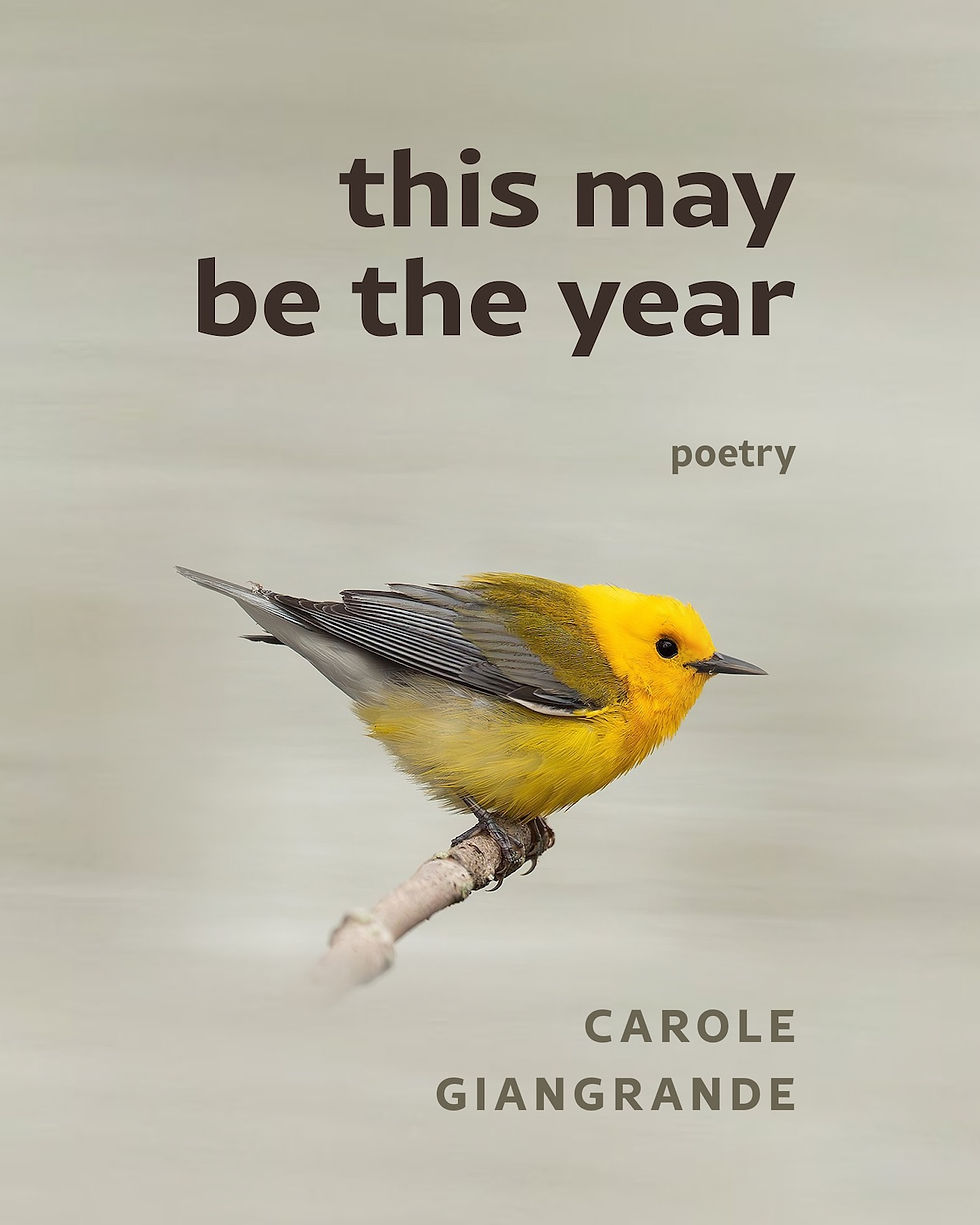
Carole Giangrande is the author of several books, including four novels, a short story collection and three novellas.
This May Be the Year (Innana Publications, 2025) is a short collection of poems organized under four sections in the book: Birdmind, Breath of Ghosts, Memory’s Shadow, In the Long Grass.
On her website, Carole Giangrande describes writing as “a contemplative act, a lifelong quest for clarity, beauty and wisdom.”
Such a quest is evident in This May Be the Year. The opening poem, Spring, Unsettled sets the tone for the collection and introduces one of its major themes—a saga of birdwatching.
Spring, Unsettled reminded me of Horace’s famous ode, Diffugere nives: a balance of meditation and uplifting notes that describe the chaotic onset of spring, the cyclicality of nature and the fragility of life.
Birdmind, the first section of the book, is made up of a sequence of bird portraits that are used to weave in sentiments and glimpses of nature, as a source of healing.
There is a Vermeer-like layering of images at play in these verses, diffused through visual connotations such as “smudge” and “blur”:
brilliant orange smudge
of pixels, all that’s left
of these gemlike creatures,
blur of chestnut feathers,
clarity of birdless twig and leaf.
(from Bird Photography)
Throughout the book, the poet seems to be building a fable of belonging and uncertainty which she conveys through sensorial cues:
You never know which day will break
into hammering rain on every roof,
a drum-roll of lost birds
fallen from the sky.
(from You Never Know)
In another group of poems, in the middle sections of the book, Breath of Ghosts and Memory’s Shadow, Carole Giangrande draws on poetic musings from disparate memories, couching them as an outpouring of grief.
The final section of the volume, In the Long Grass, includes poems of a more reflective nature, some of which bring forth the devastation of war and a desire for peace.
There is a sense of musicality in Giangrande’s verses that stays with us after closing the book:
Show me the fledgling's flight,
the delicate compass of birdmind;
draw me through pale silence
into sound.
(from Bird Walk)


Comments